{{selectedAlertBand.alertDescription}}
{{selectedAlertBand.incident.heading}}
Message last updated - Friday 10th April 2026
{{selectedAlertBand.incident.heading}}
Message last updated - Friday 10th April 2026
Message last updated - Friday 10th April 2026
{{selectedAlertBand.alertLinkText}} {{selectedAlertBand.alertLinkText}}
For further updates subscribe
The Drainage & Water Recycling Management Plan (DWMP) is a long-term strategic plan. Guiding how we'll manage, maintain and invest in our drainage and sewerage systems over 25 years.
Take a look at our first DWMP23 (‘Cycle 1’) which was published in May 2023.
Our DWMP sets out how we’re planning for the future of drainage and water recycling across our region. While there's still more work to do to understand how we reach our long term goals, we’ve started to map out how we’ll keep our services reliable as our population grows and weather becomes more extreme. This thinking will continue to develop as we work with others, use better data, and build a fuller picture of the challenges ahead.
We’re designing the DWMP so it can adapt as things change. Including new rules and regulations — ensuring we always make well evidenced, long term decisions that benefit both customers and the environment.
By setting a clear direction now, we’re strengthening the future of water recycling, improving how the system performs today. Along with getting ready for the challenges and opportunities of tomorrow.
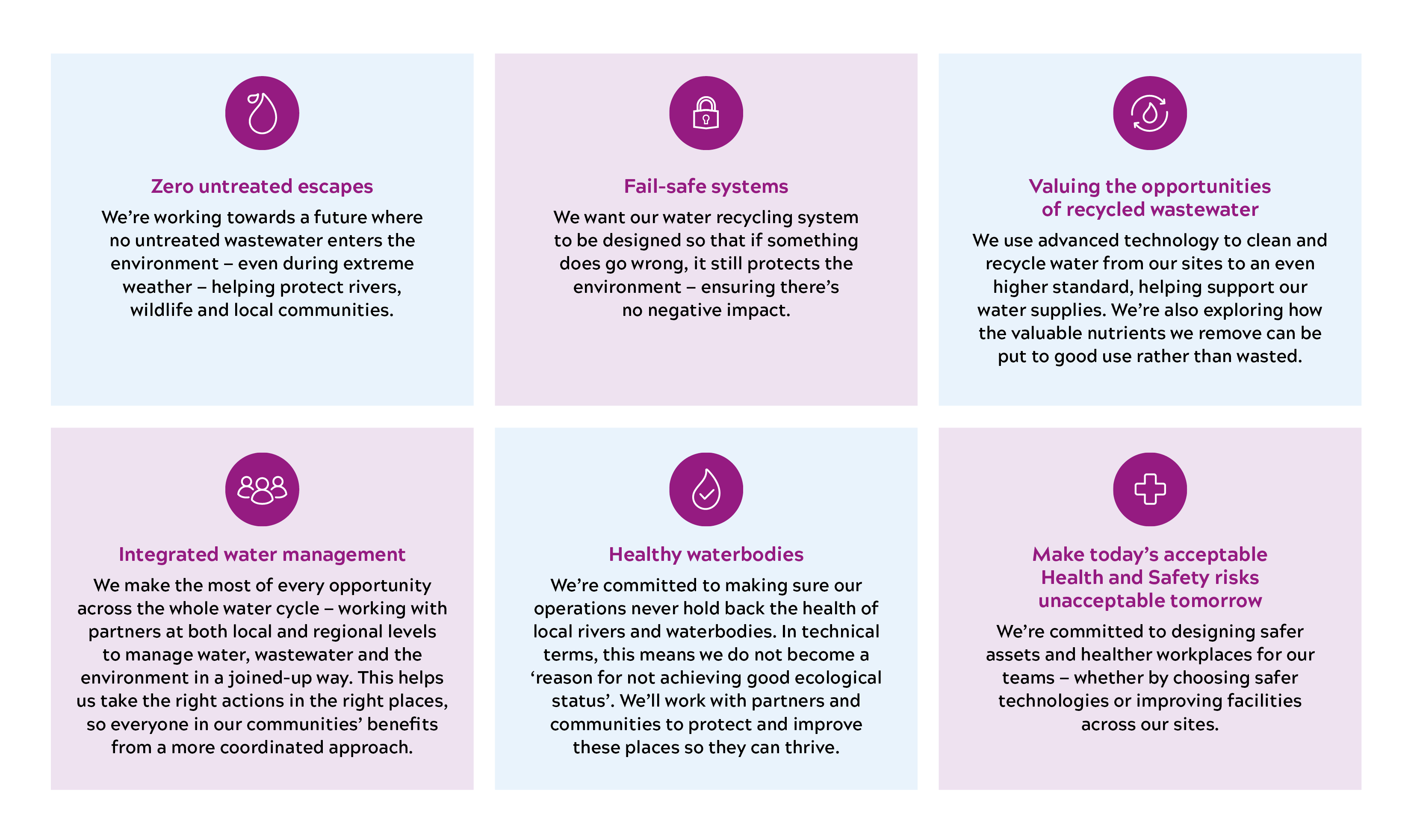
The aspirations for our DWMP have been developed across our business and with our stakeholders. Crucially, they're driven by, and align with, several other crucial plans. These include our Price Review 2029 (PR29) Business Plan and Water Resources Management Plan (WRMP). Allan Simpson, our Long-Term Delivery Strategy Manager, explains more in the video at the top of the page.
Take a look at our first webinar for this round of DWMP planning. The webinar sets out what we aim to do and how. This webinar is the first of a series of webinars being held with our stakeholders. Please contact us at DWMP@anglianwater.co.uk if you'd like to be included in the future.
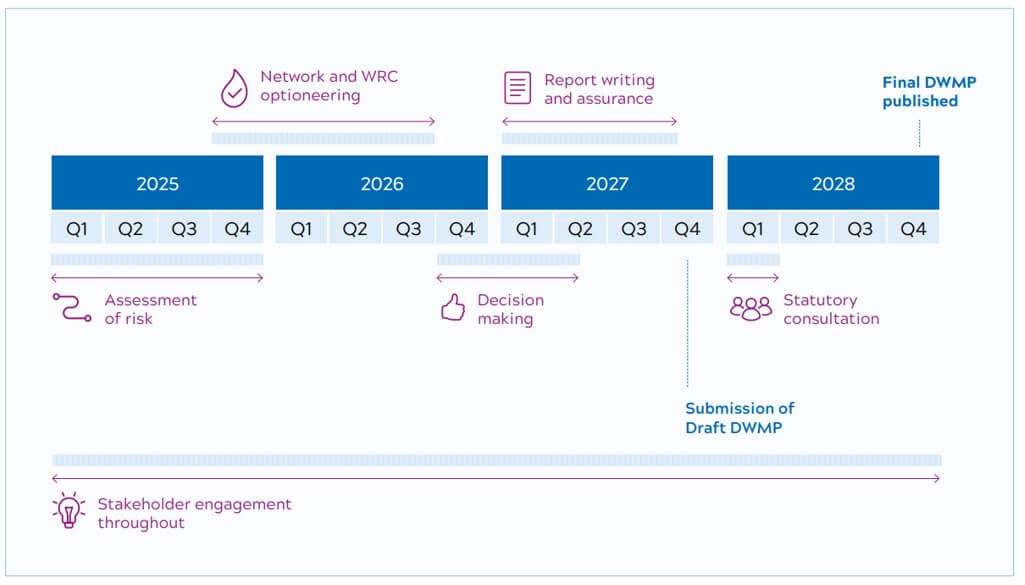
DWMP28 timescales
Long term challenges for our water recycling systems
Planning for the future has never been more important. Our region is unique and faces a wide range of risks, now and in the future. Our DWMP Project Manager, Kelly Lorking, explains the challenges our water recycling systems face in the video at the top of the page.
As summarised in the video, our region:
To help us understand these challenges we've developed our strategic context. This explores future regional trends that could impact our water recycling systems. These can viewed on the strategic context page.
We'll use these future challenges to shape our solutions between 2030 and 2055.
Our areas of assessment
To gain a better understanding of our challenges we'll use four geographical boundary levels to assess risk, aid collaboration and support reporting. These levels are:
| Level | Boundary | Purpose of boundary |
|---|---|---|
1 |
Whole area of sewerage undertaker |
Used for company-wide report (ie. the main DWMP report) |
2 |
River basin management catchment |
The strategic level for establishing collaboration between organisations and for assessing the environmental condition of water bodies |
3 |
Sewerage catchment (s) level |
The level for carrying out a planning study and developing the plan |
4 |
Local solution level (pumping station boundaries) |
Provides a focus on clusters of problems, such as flooding |
1
Whole area of sewerage undertaker
Used for company-wide report (ie. the main DWMP report)
2
River basin management catchment
The strategic level for establishing collaboration between organisations and for assessing the environmental condition of water bodies
3
Sewerage catchment (s) level
The level for carrying out a planning study and developing the plan
4
Local solution level (pumping station boundaries)
Provides a focus on clusters of problems, such as flooding
Listen to Debbie Bell, our DWMP Lead in the video at the top of the page. Explaining boundary levels in more detail and why they are important. You can view boundary levels 1 to 3 on the interactive map of our region.
These boundaries have shaped our stakeholder engagement plans:
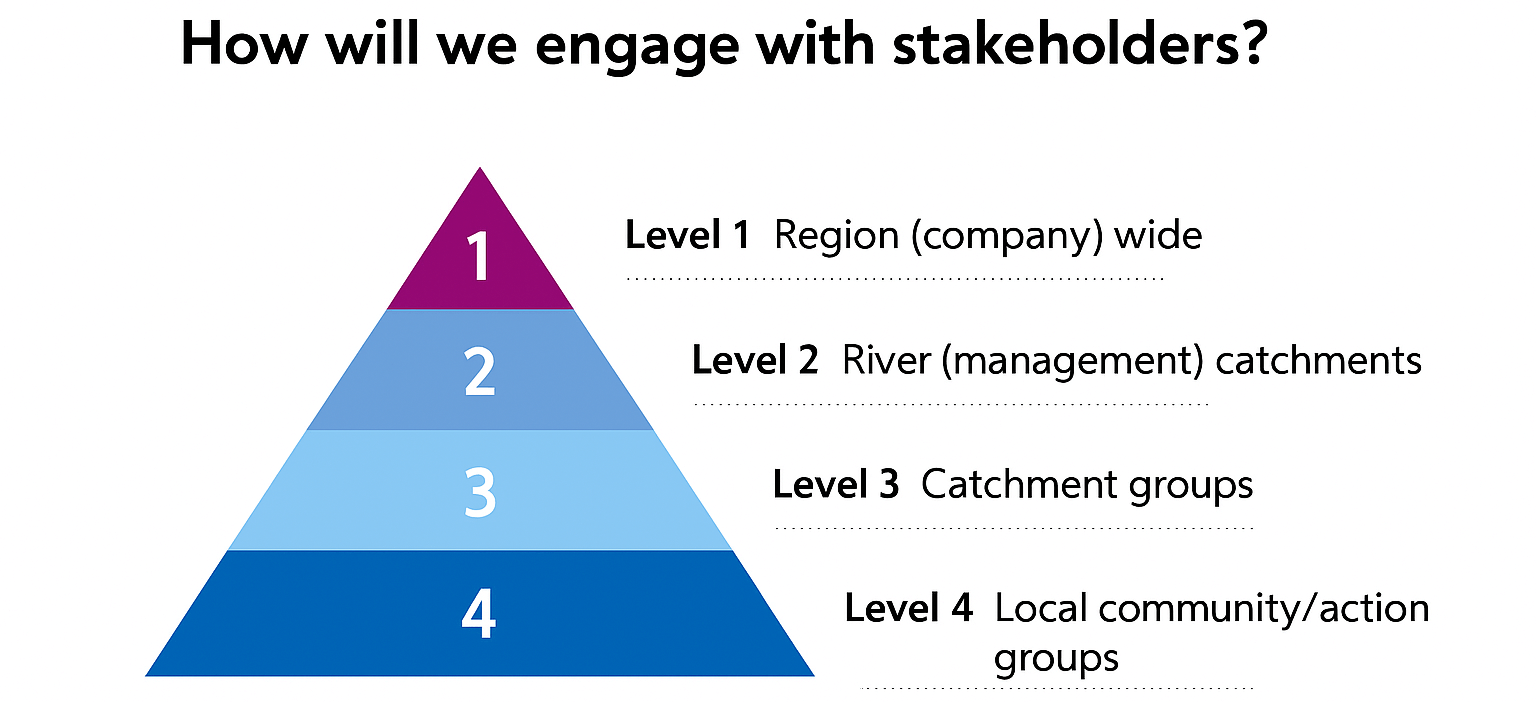
We've initiated a regional group consisting of key stakeholders from across our region and will soon start engagement at the river management catchment area. We're also engaging with stakeholders at Local Planning Authorities, Councils and through catchment workshops organised by Water Resources East.
Working with stakeholders, we've developed an options toolkit. This toolkit sets out what solutions are available to use in the DWMP, and any constraints and benefits associated with these options. Ed Richardson, our DWMP Options Lead explain the options toolkit in more detail in the video at the top of the page.
We're conducting the statutory consultation for our Strategic Environmental Assessment (SEA). Watch our video at the top of the page with Becky Stanley our Environmental Lead. Discussing why the SEA is so important to the DWMP and the environment.
Plan alignment and collation has begun across internal and external plans across our region. This will help us determine any opportunities for partnership working. Collaborating with local authorities and partner organisations gives us the greatest opportunity to jointly develop and achieve the best outcomes for communities throughout the region.
We'll be publishing our analysis of our sewerage catchment areas on our website, using our geospatial platform. The DWMP team have been collating data to understand the issues faced across our region, catchment by catchment, this will help us plan accordingly.
For further information on our DWMP or to connect with the team, please email us at DWMP@anglianwater.co.uk.